EOS Center

WiSE/Rosenberg Institute Seminar at EOS Center - Drew Harvell

The Barbara and Richard Rosenberg Institute for Marine Biology & Environmental Science and WiSE (Women in Science & Engineering) present our seminar and student lunch (see below)

Drew Harvell, Adjunct Faculty, Stanford (Hopkins Researcher); Professor Emerita, Cornell University/Stanford University   

The Ocean’s Menagerie Heating up with Climate Change 

Abstract: Climate warming heats up the web of biological interactions and accelerates community change from the base and top of oceanic food chains. Warming oceans have fueled the decade long epidemic of sea star wasting disease, causing a top-down trophic cascade and massive changes to near-shore kelps from California to British Columbia. Our recent work unveils Vibrio pectenicida as a causative agent of sea star wasting disease and the decline of the sunflower star to endangerment.  Our 12 year study of eelgrass-protist dynamics also shows a role for warming events in large decline of seagrasses. Continental scale surveys reveal that the protist L. zosterae is a damaging pathogen, characterized by diverse strains varying in virulence and likely temperature sensitivity, from San Diego to Alaska. New work highlights multiple modes of disease transmission from waterborne to herbivore- facilitated.

Bio: Drew Harvell is Professor Emerita of Ecology and Evolutionary Biology at Cornell University and former Science Envoy for Ocean Conservation (US State Dept). Her research on the health and sustainability of marine ecosystems has taken her from the coral reefs of Mexico, Indonesia, Palau, Australia and Hawaii to the cold waters of the Pacific Northwest. Her current research, based at Friday Harbor Laboratories focuses on continental scale impact of ocean epidemics. She is a Fellow of the Ecological Society of America and the American Association for Advancement of Science. Her award-winning books include: A Sea of Glass (2016), Ocean Outbreak (2019) and The Ocean’s Menagerie (2025). 
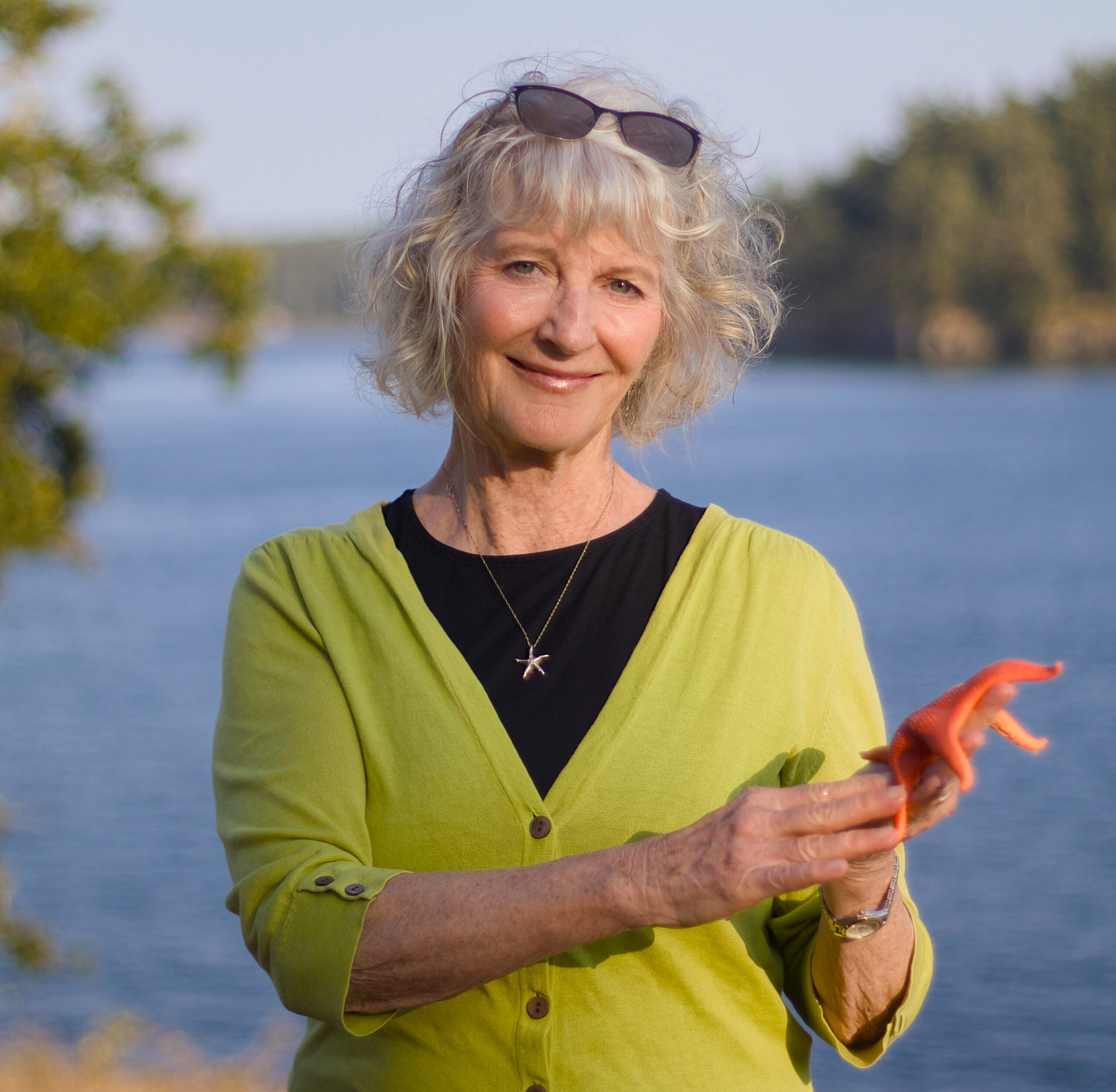
Drew Harvell

Student Lunch

Students from EOS Center and main campus are invited to join Dr. Harvell for lunch at the Bay Conference Center, Romberg Tiburon Campus at noon. 

If interested, please email Dorhkas Ramos, dramos13@mail.sfsu.edu, by October 20 to reserve your spot.


Sea star image Neil McDaniel. 

Rosenberg Institute Seminar Series at EOS Center - Ed Carpenter

Ed Carpenter, Professor of Biology, EOS Center, SFSU

Plastic Earth: A Ticking Time Bomb

Abstract: Micro-plastics now pervade all habitats on Earth. Because these particles pick up toxins, they are a threat to ecosystem and Human health. The seminar will cover history of plastic production, distribution in the oceans and on land and possible effects. Also covered are ways to reduce our use of plastics.

Bio: Dr. Carpenter's research is fairly broad, but centers on phytoplankton ecology. The research has involved ocean acidification effects on a group of calcifying phytoplankton (coccolithophores), ecology of nitrogen fixation by marine planktonic cyanobacteria, biogeochemistry of the Amazon River discharge plume in the equatorial Atlantic Ocean, phytoplankton ecology of the San Francisco Bay low salinity zone, and the microbial ecology of glacial melt water streams in the Dry Valleys of Antarctica. Dr. Carpenter has been awarded the Antarctic medal for his research and service as a National Science Foundation program officer in Antarctica. Recent, ongoing research centers on the dynamics of phytoplankton abundance in San Francisco Bay and the occurrence and environmental forcing factors of toxic phytoplankton blooms around Kotzebue Alaska. This coastal village has ~3000 people, and they depend on local food sources for their sustenance, so these blooms can negatively affect their health and well-being.  He received a doctoral degree Honoris Causa from Stockholm University in Sweden in 2000. In 1964 he received his B.S. degree in Biology at SUNY College at Fredonia, and MS and PhD degrees in Zoology from North Carolina State University in 1967 and 1969, respectively. Dr. Carpenter did postdoctoral research at Woods Hole oceanographic Institution and was a research scientist there from 1969 to 1975, then was a Professor at Stony Brook University until 2000. He has been on the faculty of the Biology Department at San Francisco State University since 2000. He has carried out sabbatical research in Stockholm, Sweden, and Kiel, Warnemuende, and Munich, Germany.

Rosenberg Institute Seminar Series at EOS Center - Wim Kimmerer, Adjunct Professor Emeritus, EOS Center, SFSU

Wim Kimmerer, Adjunct Professor Emeritus, EOS Center, SFSU

Apparent competition among four copepod species in the San Francisco Estuary, an estuarine food desert 

Abstract: The San Francisco Estuary (SFE) is home to nine copepod species, most introduced 3-4 decades ago. We analyzed potential interactions among four of these introduced species that are abundant during spring-summer in the Low-Salinity Zone (LSZ), the rearing habitat for larval delta and longfin smelt. Since 1987, grazing by the introduced clam Potamocorbula amurensis reduced summer phytoplankton biomass and productivity in the LSZby ~10-fold. The resulting chronic food limitation, together with consumption of copepod nauplii by clams, restricted copepod abundance to low levels during summer of every year since 1987, and produced a “food desert” for young smelt. Eurytemora carolleeae, introduced to the Estuary before monitoring began, was highly abundant year-round in the LSZ until it declined sharply in 1987, and it is now abundant only in spring. The other three copepod species are subtropical and most abundant during summer: Pseudodiaptomus forbesi (detected in 1988) at salinity less than ~2, and Limnoithona tetraspina (1993) and its predator Acartiella sinensis (1993)in salinity of 0.5–10. Since 1993 abundance patterns of these four copepods overlap in season and salinity, superficially suggesting competition. However, this is a case of “apparent competition”, because competition for food is ruled out by the distinct diets and incomplete spatial overlap among the four species. Rather, abundance of each species is influenced by a combination of temperature, freshwater flow, feeding by clams on microplankton and copepod nauplii, and predation. The ability of estuarine copepod species to co-occur may generally be explained better by considering the broader hydrodynamic, thermal, and predatory environment than by competition. 

Bio: Dr. Wim Kimmerer is a Research Professor of Biology (Emeritus) at the Estuary and Ocean Science Center of San Francisco State University. He has a Bachelor’s degree in chemistry from Purdue University and a Ph.D. in biological oceanography from the University of Hawaii. Previous positions include a stint in U.S. Navy nuclear submarines, a three-year fellowship at the University of Melbourne, Australia, and a position at a consulting firm in central California. In 1994 he established a zooplankton laboratory at the EOS Center focused mainly on the San Francisco Estuary, studying both the basic ecology of zooplankton and fishes in the estuary, and management concerns such as the maintenance of declining and listed species and the influence of human activities. Current focuses of the laboratory include interactions between physical dynamics of the Estuary and the distribution and dynamics of planktonic organisms, the planktonic food web effects of introduced species, and effects of variation in freshwater flow on fishes, particularly the endangered longfin smelt. He is Principal Investigator of several large projects in the Estuary, including a study of the dynamics of longfin smelt, temporal transitions among a suite of introduced estuarine copepods, and a study of copepod movements into and out of a large tidal wetland. He served as Co-founder and later President of the California Estuarine Research Society, Chair of the Estuarine Ecology Team, Interagency Ecological Program (1995–2015), Co-Chair of the Science Board, CALFED Bay-Delta Ecosystem Restoration Program, and Science Advisor to the San Francisco Bay Subtidal Habitat Goals Project. In 2012 he received the Brown-Nichols Science Award presented by the Delta Science Program for significant research and application of science to manage the estuary, and in 2013 received the Conservation Achievement Award from the Cal-Neva Chapter of the American Fisheries Society. He is a Fellow of the California Academy of Sciences.

Rosenberg Institute Seminar Series at EOS Center - Jaime Jahncke

Jaime Jahncke, PhD, Director, California Current Group, Point Blue Conservation Science and Adjunct Professor at San Francisco State University’s Estuary & Ocean Science Center

From Peru to California: How ocean processes influence prey and predator abundance in coastal areas? 

Abstract: This presentation examines the interplay between ocean processes and the abundance of prey and predators in coastal ecosystems, with a focus on regions in Peru and California. The talk explores how physical oceanographic processes influence prey availability and seabird distribution, highlighting findings from long-term studies on seabird diet, foraging ecology, and ecosystem dynamics. The work of Point Blue Conservation Science, particularly at the Farallon Islands and within the Greater Gulf of the Farallones, is showcased as a model for understanding and addressing environmental challenges. Research emphasizes the impacts of climate change, marine heatwaves, urban pollution, and human activities on marine biodiversity and ecosystem health. Dr. Jahncke also discusses innovative approaches, including automated surveys, drones, and machine learning, to enhance data collection and analysis. The talk concludes with a call for collaborative, science-based strategies to advance ocean conservation and build resilience in the face of climate and human pressures. 

Bio: Dr. Jaime Jahncke is the Director of the California Current Group at Point Blue Conservation Science and an Adjunct Professor at San Francisco State University’s Estuary & Ocean Science Center. With over 30 years of experience in marine bio-oceanography, Jaime’s work focuses on understanding and conserving marine wildlife and ecosystems. He collaborates with diverse partners to develop science-based solutions for ocean resilience, sustainable fisheries, and biodiversity conservation. Committed to advancing equitable and innovative approaches, Jaime strives to integrate research, policy, and community engagement to protect marine habitats and support coastal communities. 

Rosenberg Institute Seminar Series at EOS Center - Lydia Baker

Lydia Baker, Assistant Professor, California State University Monterey Bay

Illuminating Marine Symbioses: Microbial Interactions, Evolution, and Inclusive Science

Abstract: Interactions among organisms are catalysts for biological innovation; this is especially true for symbiotic relationships between marine bacteria and their animal hosts.  From the glowing symbioses of anglerfish to gooey lesions on sharks and the intricate partnerships between bacteria and coral reefs, my research unravels the diverse and fascinating microbial interactions across marine life. Leveraging advanced sequencing methodologies and bioinformatics, my research explores evolutionary trajectories, ecological strategies, and transmission methods of symbiotic bacteria. Understanding interactions is also essential to fostering a more inclusive scientific community. At my position at CSUMB I aim to expand on existing undergraduate and post-baccalaureate programs, as well as initiate strategic partnerships with local organizations and leverage diverse communication platforms to diversify outreach initiatives at CSUMB and beyond. 

Bio: Dr. Lydia Baker earned their Ph.D. in Oceanography from the University of Hawai’i at Mānoa, focusing on diatom-associated bacteria. They completed postdoctoral research at Oregon State University and Cornell University, studying microbial interactions and symbiosis in anglerfish and coral respectively. After working as a lecturer and continuing their coral research at the University of Miami, Dr. Baker joined the California State University Monterey Bay as an Assistant Professor of Outreach and Education where their research covers microbial ecology, symbiont evolution, and their impact on marine ecosystems.